
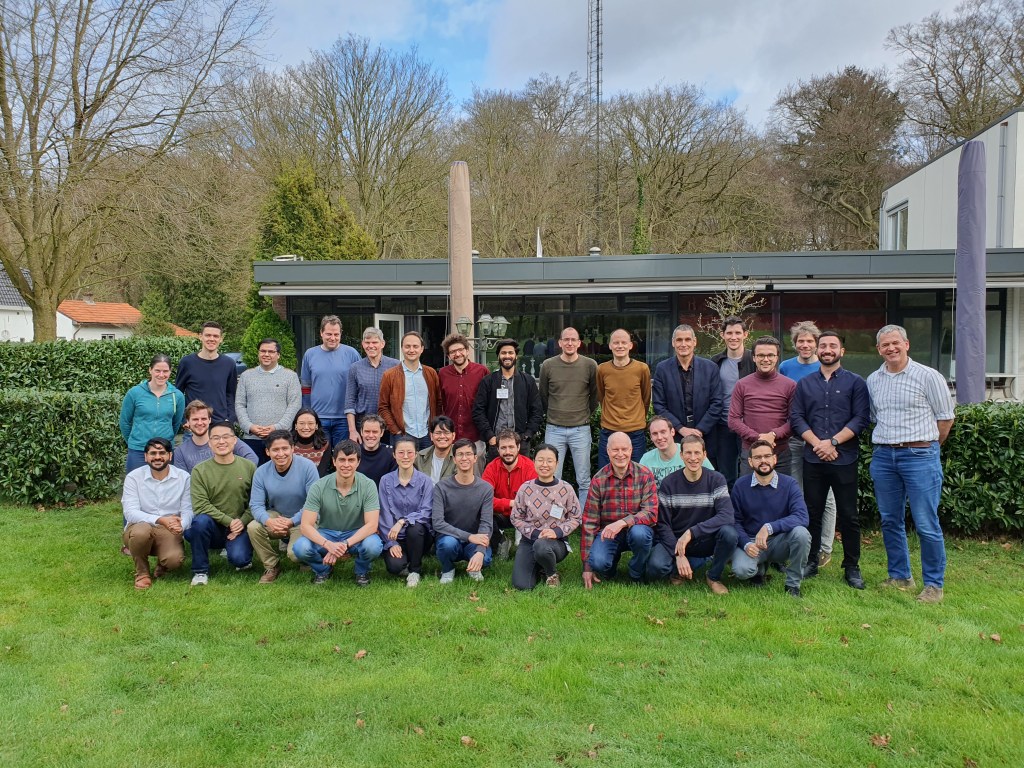
This blog post was originally written by me for my department, but the blog manager left for a new job. Instead of keeping it tucked away unpublished I decided to share it here. Enjoy!
Plant and crop growth simulation models are now a basic tool for many researchers. In this age of artificial intelligence (AI) models, mechanistic crop growth models are more important than ever. It is increasingly easier for people to develop a model with AI requiring little to no knowledge of the underlying mechanistic process and the skills to create sound models from scientific equations. There is an urgent need to train the next generation of scientists on the further development of dynamic crop simulation models so that they can understand these mechanistic processes and model development in a way that can be enhanced by AI rather than replaced by it.
Using information about crop genetics, the cultivation environment, and practices farmers implement crop models can be utilized to create predictions of crop growth and yield. These predictions can aid farmers in planning for a profitable season in the face of climate change factors such as increased CO2, droughts and floods, temperature, weather variability, and extreme events. However, many of the mechanistic crop models have challenges coping with these conditions as they were developed years ago and tested under conditions we had experienced in the past, not the conditions we had yet to encounter.
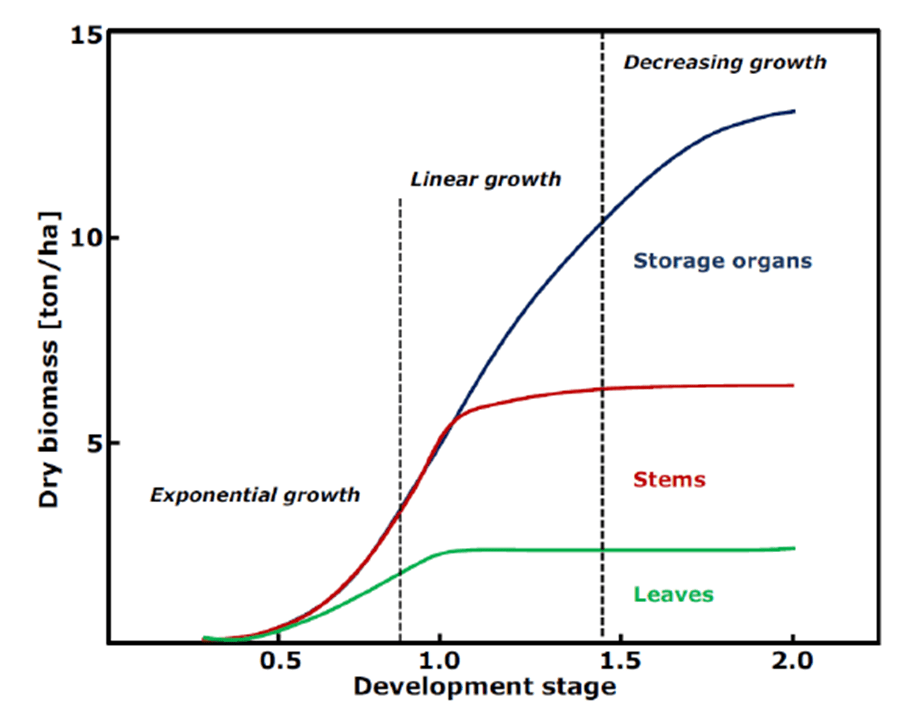
International Collaboration and Training
These issues and concepts are not unfamiliar to students and faculty at the University of Florida’s (UF) Agricultural and Biological Engineering Department. This year four graduate students, Fabio de Oliveira, Dawood Atta, Alwin Hopf, and Donald Coon joined faculty members Gerrit Hoogenboom and Wilingthon Pavan on a trip to a course at Wageningen University and Research in the Netherlands. The course titled “Crop Modelling and Climate Change: Training the Next Generation of Crop Modelers for Crop Model Development and Improvement” brings together an international group of senior scientists and crop modelers to pass on their skills and knowledge to the next generation of modelers over five days.
The course began with a keynote address from Professor Ioannis Athanasiadis discussing the relationship between AI and crop models, a subject of much debate in the field, as alluded to earlier. This keynote set the tone for the students to think critically about models and how best to apply the knowledge and tools at our disposal for the rest of the week. After that keynote was a poster carousel that allowed all the students to share experiences with crop models and ask questions about their peers’ research.
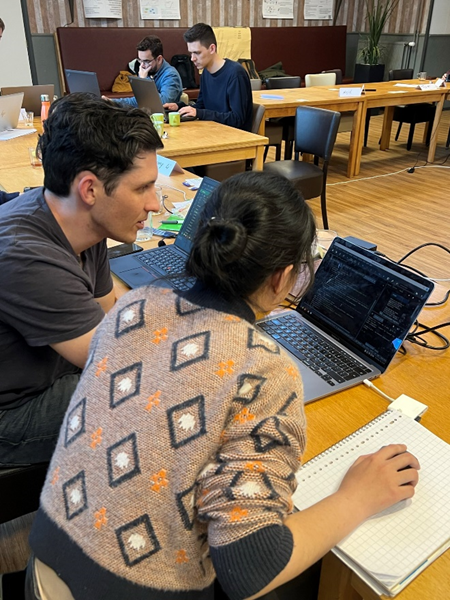
The next four days followed a rigorous schedule with lectures in the morning, tutorials at midday, and group work in the afternoon. The lectures covered technical aspects such as converting process knowledge to models, model calibration, and techniques to evaluate them alongside plant physiology including photosynthesis, soil-water dynamics, evapotranspiration, and nutrient limitations. Tutorials were provided for both the World Food Studies (WOFOST) and Decision Support System for Agrotechnology Transfer (DSSAT) crop models to aid students in digging into the code behind these models as part of their group projects. The tutorials showed them how to set up and run the models but also how to utilize future climate predictions, make modifications to improve predictions, and conduct sensitivity analyses. The lectures and tutorials fueled the group project work on making the DSSAT and WOFOST more robust to climate change with a focus on water and/or temperature.
Each UF student worked with 3 – 4 others from Wageningen. They all diligently worked together to sift through the available data sets, understand their assigned crop model, and make changes to these complex programs. Senior scientists and developers of the crop models were present to assist in the afternoon, but work sessions often went beyond class hours as the students strived to perform their best.
The Next Generation of Crop Modelers
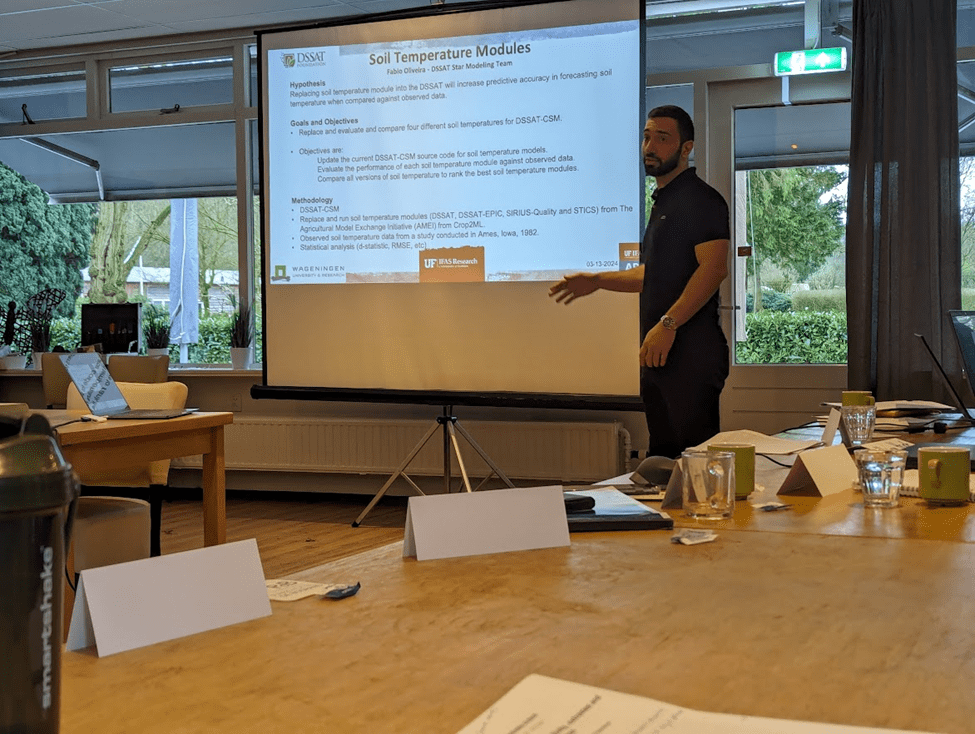
The final presentations ranged across a wide variety of subjects. One utilized future climatic data to create predictions of future potato yields, which complemented another’s efforts to use model outputs to inform breeding guidelines of a heat-tolerant potato variety. Some groups dug even deeper into the models by creating a whole new module to manage a crop’s response to soil temperature or even adjust the frequency of calculations from daily to hourly for improved crop development predictions.
At the beginning of the course, Dr. Gerrit Hoogenboom to illustrate the point that there is a lack of crop model developers said, about DSSAT specifically, “We have 25,000 users, 99% only ever download and run it.” Upon the completion of this course, the students who attended were now part of that 1% of users, the kind that can take a crop model, understand how it works, design research to support its development and implement those changes.
These students represent the next leap in crop modeling, those who are up to the complex task of not just ensuring accurate predictions of yields but ensuring that these tools can adapt to the changing climate and technological fields that we find ourselves facing. These students dove headfirst into the code to meet the challenges presented to them at the course, which will serve them well as they set out to apply their skills throughout their education and career.
Proudly written without large language models.
©Donald Coon 2025 available at https://doi.org/10.5281/zenodo.13160459
This work is licensed under CC BY 4.0
 Donald S. Coon