

When I talk about simulations and modelling it typically means some computer program or series of equations designed to predict events given a set of inputs. Pretty basic concept, I even use it as a joke that the gaming PC I have at home was built to run heavy duty simulation tasks, they just happen to be all be video games. This was the concept I took and ran with for a “presentation about anything” in a seminar course I took, and as I explored it found that in many cases an academic crop model and a game with a farming system must address many of the same considerations, but most importantly, both can act as tools of information transfer.
Value of Creation
When developers are creating a game, unless it’s specifically a farming one, there will likely be discussion about the inclusion of a farming system. Whether it’s as simple as arranging plants for aesthetics or an integral part of the games design, it is essential to consider the amount of time dedicated to developing their “crop system model” for inclusion into the larger game. This same idea translates to the real world, expect instead of player engagement, it’s the value that it brings to the stakeholders.
Imagine this, someone loves fiddlehead ferns so much they dedicate an extreme amount of time and money to creating a crop system model dedicated to this one crop. To them it represents the transition from tasty treat that can only be foraged seasonally to being able to get it in the grocery year round. To everyone else though… it’s a bit much. Farmers wouldn’t likely transition to a fiddlehead production system because of the cost involved and most importantly, the lack of market. All that time and effort would be largely ignored by most except for the few enthusiasts who bend it to their will as a method to find potential foraging areas.
Complexity and Accuracy
After the decision to add a crop model to the game or to make/modify one for farmers comes the decision regarding complexity and accuracy. I have picked up some games and found the agricultural systems to be far more complex than expected, like in RimWorld where labor, light, temperature, and post-harvest storage are all important. Likewise, I have found some survival games that reduced the complexity of crop production to near trivial levels, like in Subnautica where you just need the proper box and a seed. I honestly don’t know the details on how developers make decisions on how to actually model crop production or how complex to make it, but suspect it all boils down to game mechanics, the type of playstyle and cost to program.
These concepts of what to include, simplify, or ignore are the cornerstone of modeling, there are entire branches of academics dedicated to quantifying the impact of complexity on a model’s accuracy. All of them directed toward answering the question of “Does adding the ability to model this increase the accuracy more than it increases uncertainty?”. Each layer of complexity added can create a deeper understanding of the system, but at the cost of uncertainty and computational resources. In the end though, each element contributes to a balance between simplicity and complexity for the targeted end user.
User Interface
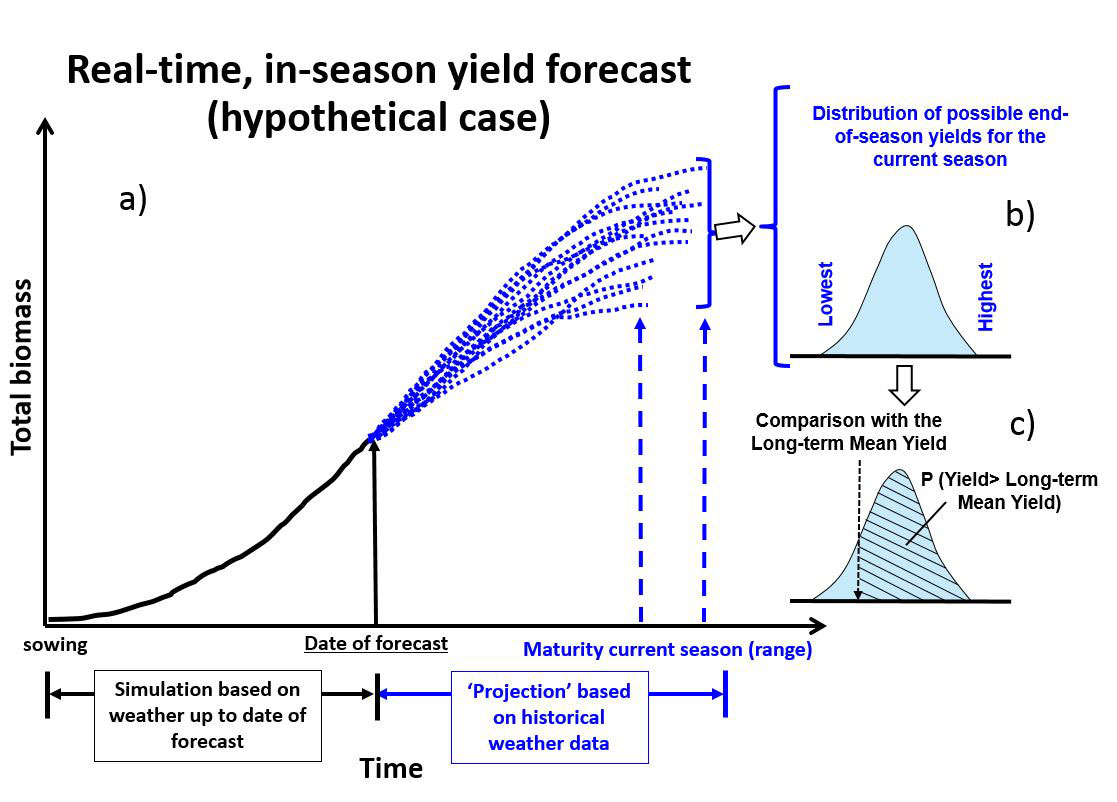
Honestly, the user interface between these two types of simulations is where things are typically the farthest apart. Of course, a video game is graphical, with representations of the fields, plants, and the environment running endless feedback loops and adjusting everything to represent the choices the player made. Meanwhile, a crop models graphics typically peaks at a slick chart, unless you’re a functional structural plant modeler, in which case you get a real neat digital plant.
I don’t think this will necessarily be the case forever though, creating graphical representations of data gets easier and easier with each passing year as our computational abilities increase. Already smartphones are capable of generating 3D point clouds, IoT sensors enable digital twins of farms, and graphics cards can support real time translation of data into imagery. All these technologies and so much more can be piped into and coupled with crop models for realistic depictions of farms and enhanced management.
Conclusions
To those with agricultural experience games may seem to trivialize the complexity of farming, however there is a growing number of people with little to no agricultural experience. A simple game might teach them a surprising amount about the food system, or negatively reinforce misinformation. Instead of griping about how some of Stardew Valley’s crops will never die from a drought or the sudden instantaneous shift of seasons, I get excited to see people interacting with digital agricultural systems. These non-agricultural people get to try optimizing the various tasks from preparing a field with soil amendments, planning the crops for the season, calculating the length of time some tasks will take, and exploring methods for value added production. In the end I hope they become curious enough to learn more about agricultural production and develop a greater appreciation for those that produce their food.
Meanwhile those who create crop models have the responsibility to incorporate enough complexity to ensure that the model accurately reproduces production. Their models will be used to address real-world problems too difficult to gamify for the public, helping guide management decisions and predict yields. In the end both simulation types are informational systems that can shape our understanding and interactions with agriculture.
Proudly written without large language models.
©Donald Coon 2024 available at https://doi.org/10.5281/zenodo.14027105
This work is licensed under CC BY 4.0
 Donald S. Coon