
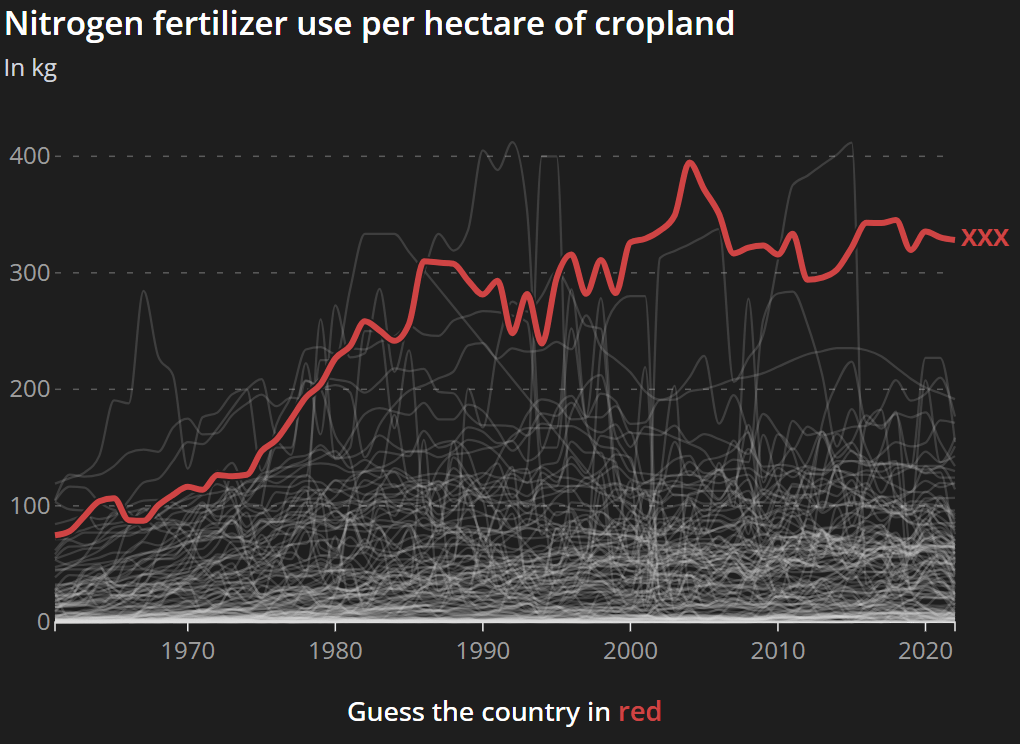
I recently discovered a new daily game which I have been quite enjoying. That is extra surprising as I don’t particularly care for mindless little games that encourage and expect you to log in every day to participate. Perhaps that is why Chartle grabbed my attention and has held it for months now. It’s more than guessing a word, picking apart a pattern, or whatever countless other daily games that exist have you do. It uses real data from the world around us, has a decent chance of using thought processes beyond simple pattern recognition and can challenge biases you might not be aware of. All through the simple mechanic of ”Guess the country in red”.
Real World Knowledge
Chartle pulls data from global datasets meaning that you can never be sure what the days subject will bring. In the last week it been the number of cattle, cumulative refugee population by country of origin, death rate from poisoning (per 100,000 people), rice production, apricot production, and bauxite production. Admittedly I avoid searching anything beyond a map of the globe to avoid accidentally finding the answer, but I did have to look up what bauxite was. The point is though, that the subject matter can be almost anything so even if you are like me and have a pretty decent understanding of global agriculture, you will be challenged by mining, demographics, technology adoption and whatever else there is enough data for. Sometimes a map of the globe is helpful but sometimes all it can do is remind you of countries you forgot about.
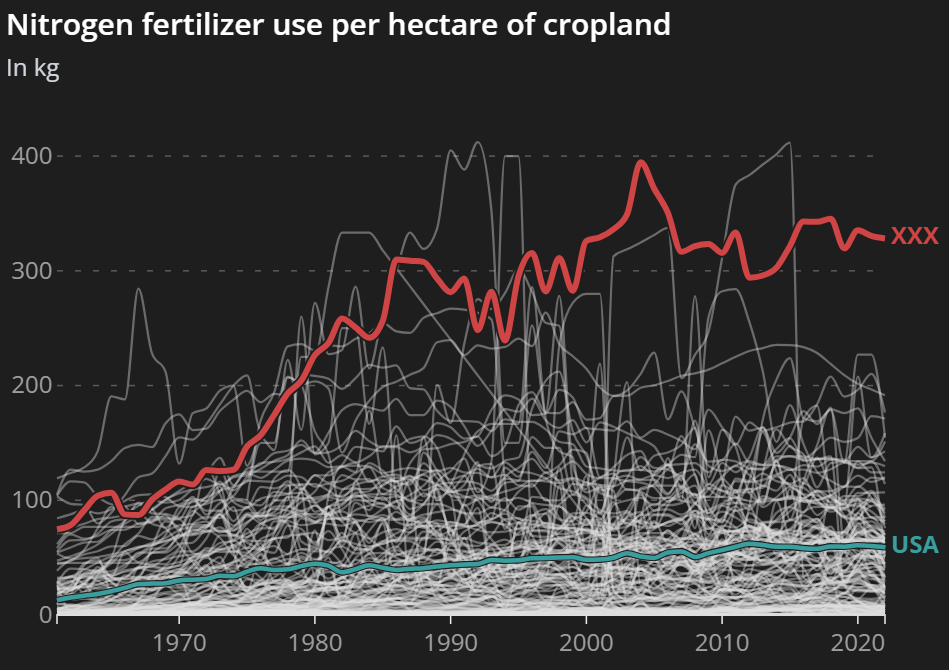
Today’s Chartle is nitrogen fertilizer use per hectare of cropland, and guessing which country currently uses the most. At first glance, my thoughts are “ugh, this will not be an easy one”. I’m not sure how much any country uses other than too much. However, I do know that without a step drop recently the answer is not Sri Lanka. My first guess today (USA) is less of a guess and more of something to help me get familiar with the values and try to work towards the right answer. As expected though, that’s not the answer. Much lower than I expected given how much I hear about our overfertilization in this country.
Now that I have a reference, it’s time for critical thinking. One thing I have learned through many mistakes is that anything per unit of something else can be quite tricky. The answer is likely a country that likely has less cropland and uses a lot of fertilizer, emphasis on the word and. That is why I didn’t think the answer would be the USA as it has a lot of cropland and uses advanced fertilization practices on most of it.
Challenging Bias and Thinking Critically
At this point I have to start thinking about my own thinking (metacognition yay!). It is easy to get locked into biased thinking about what kinds of technologies, practices or countries would be less “less advanced” using up my remaining four guesses. That would be cognitively (and morally) not a good path. If I think the answer is in Africa, I need to try and come up with answers as to why that may be a valid answer rather than how it aligns with my potentially flawed view of African agriculture.
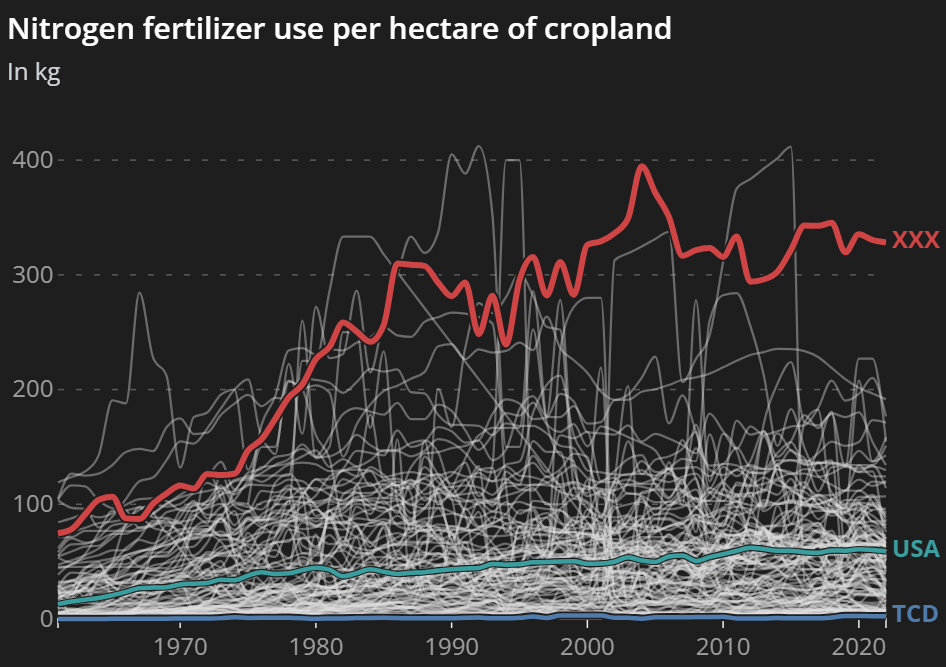
I suspected that most African countries would not have this crazy amount fertilizer per hectare due to the amount it would cost. However, for today’s purposes I guessed Chad just to see if my assumption that an African country wouldn’t necessarily have access to that obscene amount of fertilizer to use might be accurate, seems reasonable given the outcome.
My next guess, hopefully narrowing down the range of possibilities, is going to be something with a rather distinct agricultural system compared to the US or Africa. I’m going to guess Indonesia due to the amount of rice production that happens there. I can’t remember if rice production uses a lot of fertilizer, but I feel good since there’s only a few countries with extremely large rice production and only a few lines on the chart are above 150 kg, one of which is/was likely the rice growing Sri Lanka.
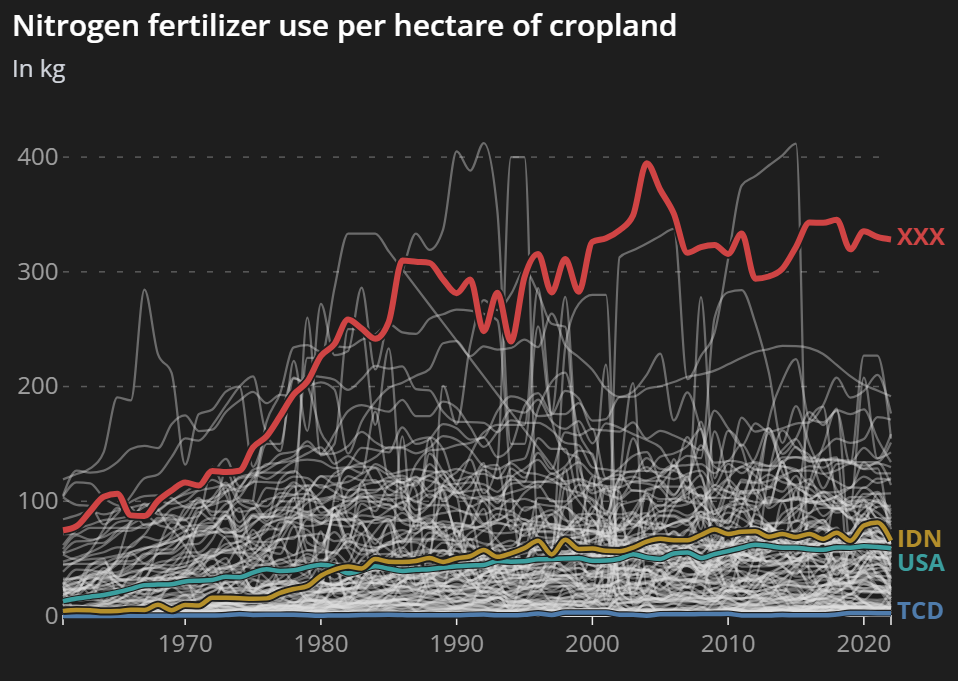
It looks like that logic may not have been correct either. My next guess is going to move to yet another shift in agricultural production techniques, greenhouses. Sadly, I don’t know if greenhouses count as cropland in this dataset but it’s worth a guess. My logic here is that greenhouses typically use fertigation supplying fertilizers frequently throughout the year rather than field applications done seasonally. Fortunately, there are a few countries I know, without bias, have large amounts of greenhouses such as the Netherlands and Spain.
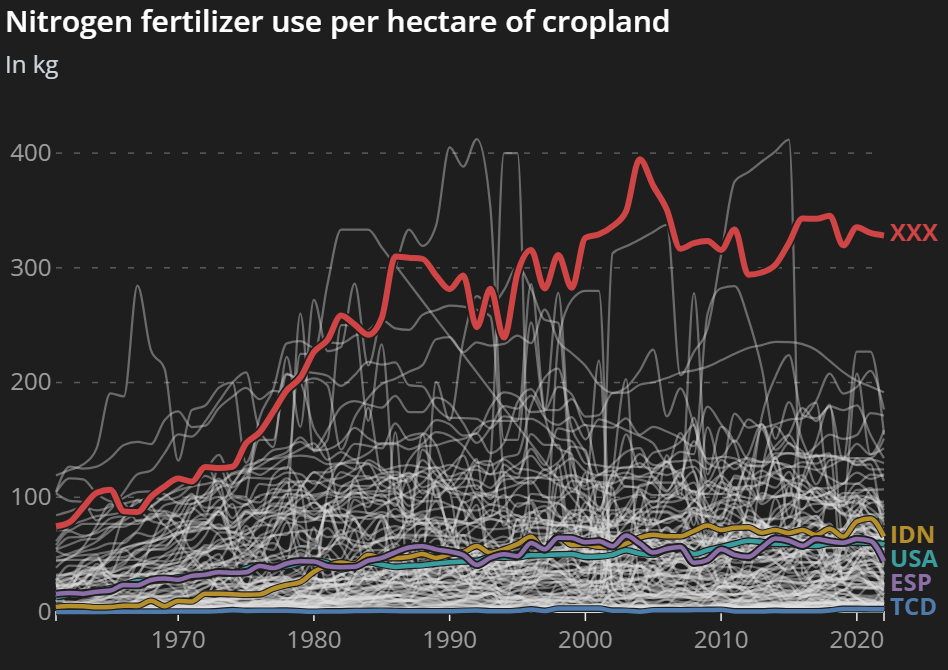
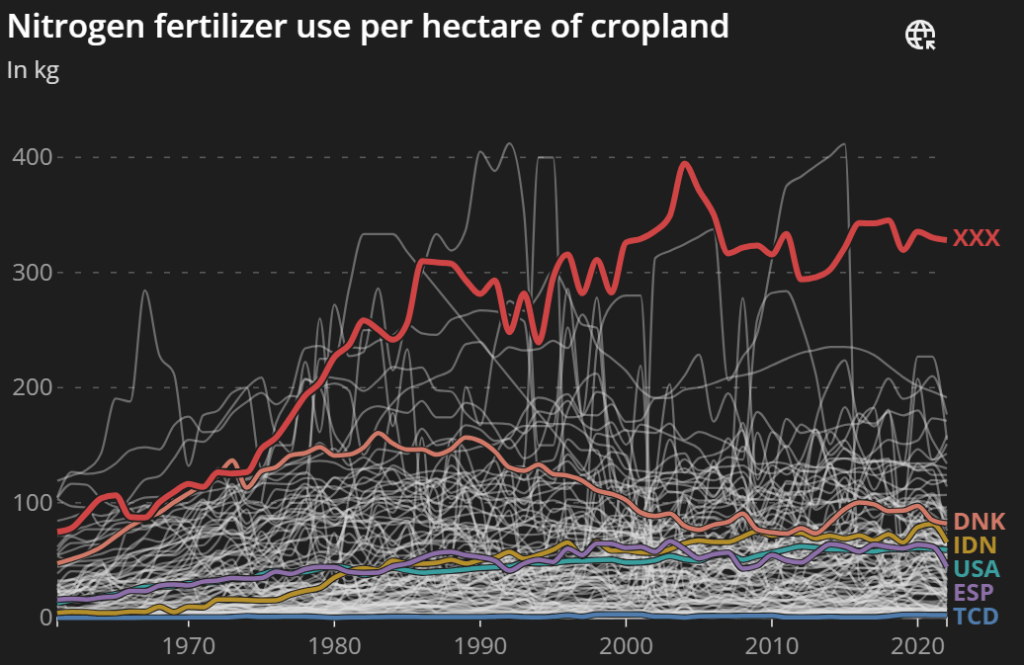
At this point I suspect my logic is seriously flawed, fortunately I don’t think my answers are skewed by my biases today. For my final guess I will try the one country that has consistently surprised me in matters of per capita statistics. Denmark.
Conclusion
Well, no shower of confetti for me today, the answer was Egypt. The country that almost completely stopped using fertilizer between 2010 and 2020 was not Sri Lanka, it was Bahrain. It’s ok though cause I’m not the only who didn’t get it today.
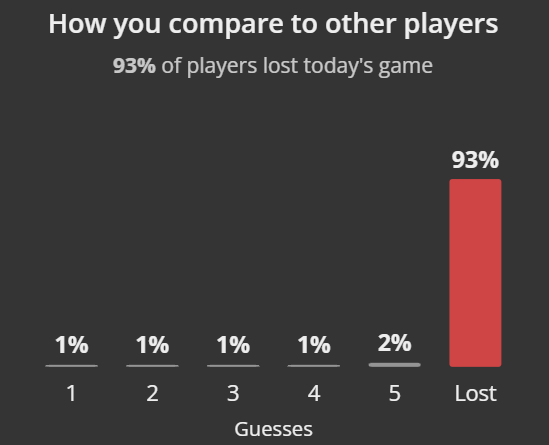
Typically, it’s not such a sweep, but as I said todays’ Chartle wasn’t easy. While it is a simple game, if you take the time to apply critical thinking it can be an excellent exercise in slowly working through solutions. Lots of different critical thinking techniques can be applied to try and narrow down the answer. That’s why I find Chartle to be a much more rewarding daily game to play than its name-inspiration Wordle. If it sounds fun to you, head over to Chartle.cc to get started, grab some friends too and have some competitive fun. They might even be able to help to you learn interesting things that could help in future Chartles!
©Donald Coon 2026 available at
This work is licensed under CC BY 4.0

 Donald S. Coon